Common problems with Harringay oven cleaning and quick fixes
If you've ever opened the oven door, taken one look at the baked-on grease, and thought, "Right, where do I even start?", you're in good company. Common problems with Harringay oven cleaning and quick fixes usually come down to a mix of stubborn residue, awkward oven parts, the wrong cleaning method, or simply not enough time to do the job properly. In a busy home, that can turn a simple clean into a messy half-hour that somehow eats the whole afternoon.
This guide breaks down the most common oven-cleaning headaches, why they happen, and the quickest sensible fixes that actually help. You'll also find a practical step-by-step process, a checklist, and advice on when it makes sense to call in a professional oven cleaning service instead of wrestling with it yourself.
Table of Contents
- Why this matters
- How the cleaning process works
- Key benefits and practical advantages
- Who this is for and when it makes sense
- Step-by-step guidance
- Expert tips for better results
- Common mistakes to avoid
- Tools, resources and recommendations
- Law, compliance, standards, or best practice
- Options, methods, or comparison table
- Case study or real-world example
- Practical checklist
- Conclusion
- Frequently asked questions
Why Common problems with Harringay oven cleaning and quick fixes Matters
An oven that looks "mostly fine" can still be harbouring grease around the door seal, carbon build-up on the racks, and food splatter behind the fan cover. That matters for a few reasons. First, it affects how evenly the oven cooks. Second, burnt residue can create smoke and smells that spread through the kitchen. Third, the longer you leave grime in place, the harder it becomes to remove later. Simple enough, but it catches a lot of people out.
In Harringay homes, where kitchens can be compact and ovens work hard every day, little issues add up fast. A small spill after Sunday roast, a tray that overflowed midweek, or a sticky patch left after the grill was used all can turn into a stubborn, crusty mess. To be fair, nobody notices it immediately. Then one day the oven door starts fogging with grease, and that's when people suddenly want miracles.
Quick fixes matter because they help you deal with fresh problems before they become deep-set damage. They also help you clean safely. Rubbing harder is not always the answer, despite what a few aggressive kitchen sponges might imply.
Expert summary: The best oven-cleaning fix is usually the simplest one: treat the residue early, use the right tool for the surface, and avoid anything that could damage the enamel, glass, or seals.
How Common problems with Harringay oven cleaning and quick fixes Works
Most oven-cleaning problems fall into the same few categories: grease, burnt-on carbon, smoke stains, blocked vents, and streaky glass. Once you know what kind of mess you're dealing with, the fix becomes much more straightforward. The wrong product can waste time, but the right one can save a lot of scrubbing.
Here's the basic logic. Fresh spills are usually soft and greasy, so warm water, a mild degreaser, and a cloth often do the job. Older spills have dried and carbonised, which means they need dwell time, gentle abrasion, or heat-assisted loosening. Glass doors tend to show streaks and trapped grime between layers. Racks and trays collect thick residue and often need soaking. And if the fan or vent areas are clogged, the oven may smell smoky even after the visible dirt is gone.
Quick fixes work best when they are matched to the problem. For example, if the oven is smoking after cleaning, the issue is often leftover product or residue rather than a new fault. If the door looks cloudy, you may be using too much liquid or a cloth that leaves lint. If the racks are still sticky after a soak, the grease is probably cold-set and needs a second round.
That's the real trick: identify the symptom before reaching for stronger chemicals.
Key Benefits and Practical Advantages
Understanding the common problems gives you more control, and honestly, it saves time. A cleaner oven is not just about appearance. It can improve day-to-day cooking, reduce smells, and make a kitchen feel calmer. Small thing, maybe, but you notice it.
- Less smoke during cooking: removing grease stops old residue from burning every time the oven heats up.
- Better cooking results: cleaner fans and surfaces help heat circulate more evenly.
- Reduced cleaning effort later: tackling spills early stops them becoming hard carbon deposits.
- Safer handling: fewer chemical residues and less greasy build-up around doors and knobs.
- More pleasant kitchen use: no one enjoys the smell of stale roast fat on a Thursday evening.
There's also a practical money angle. If you keep on top of minor problems, you are less likely to need a heavy restoration clean later. That's especially useful if the oven is due for a tenancy handover, a pre-sale tidy-up, or part of a wider deep cleaning routine for the home.
Who This Is For and When It Makes Sense
This guide is useful for anyone who uses an oven regularly, but it's especially relevant if you live in a busy household, rent a property, manage shared accommodation, or just inherited an oven that has seen one too many lasagne disasters. Let's face it, ovens do not usually get dirty in one dramatic event. They get dirty gradually, then all at once.
It makes sense to use quick fixes when:
- the oven has light to moderate grease build-up;
- the glass door is streaky but not etched;
- there is a recent spill that has not fully hardened;
- the oven smells after cooking but otherwise works normally;
- you need the oven usable again the same day.
It makes less sense to keep patching over the problem if the dirt is baked-on across several surfaces, the fan area is visibly clogged, or the oven has been neglected for months. In those cases, the short-term fix becomes a long-term battle. That's when a professional clean may be the more sensible option, especially if you are preparing a property for end of tenancy cleaning or a full house cleaning refresh.
Step-by-Step Guidance
The easiest way to handle oven cleaning is to work from the least aggressive solution to the more targeted one. Start small. You can always do more if needed.
- Let the oven cool fully. Cleaning a hot oven is messy and unsafe. Warm is fine for some methods, hot is not.
- Remove loose crumbs and trays. Take out racks, trays, and any removable parts first. Shake out debris into a bin.
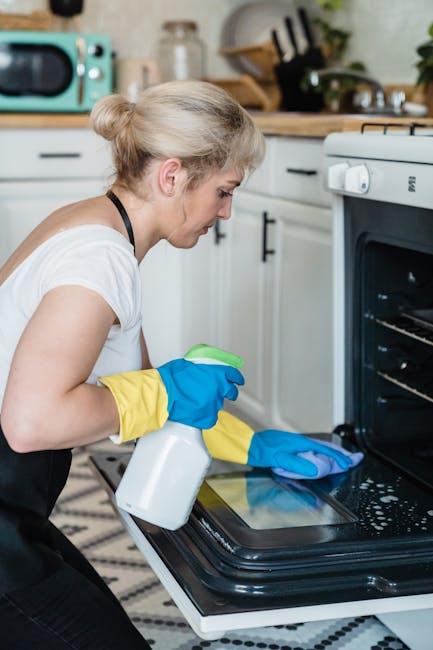
- Wipe fresh grease immediately. A damp microfibre cloth with a little mild washing-up liquid can remove recent splashes before they set.
- Soak removable parts. Racks and trays usually need a soak in hot soapy water before scrubbing. If the grease is stubborn, leave them longer rather than attacking them with force.
- Treat burnt-on spots separately. Use a paste or degreasing cleaner on the worst areas, then allow it to sit for a few minutes. Don't rush the dwell time.
- Clean the oven glass gently. Use a non-scratch pad or cloth. For cloudy marks, work in small circles and wipe clean with a fresh damp cloth.
- Deal with door seals carefully. These are easy to damage. A soft cloth is enough. Avoid flooding the area.
- Clear the final residue. Any remaining cleaner should be wiped away completely. Leftover product can smoke when the oven heats up.
- Dry before reheating. Open the oven briefly or use a dry cloth so you do not trap moisture inside.
- Test with a short heat cycle. A short low-to-medium heat run helps reveal any missed residue or lingering smell.
If you are dealing with a light issue, that sequence often sorts it in one go. If the oven is heavily soiled, repeat the soak-and-wipe stage rather than increasing pressure. More force is not a better plan. It just gets you tired and annoyed.
Quick fixes for the most common problems
- Sticky grease on the door: wipe with warm soapy water first, then use a mild degreaser on a cloth.
- Burnt smell after cleaning: check for leftover product on the base, sides, or fan cover and wipe again before reheating.
- Cloudy oven glass: switch to a clean dry microfibre cloth for the final polish.
- Racks still tacky after soaking: repeat the soak with hotter water and fresh detergent.
- Black marks that will not shift: leave a targeted cleaner to dwell longer, then lift gently rather than scrubbing harder.
Expert Tips for Better Results
Here's where a few small habits make a big difference. In our experience, the best oven cleans are not the most dramatic ones. They are the steady, patient ones.
- Clean sooner rather than later. A spill cleaned the same day is ten times easier than one cleaned next week. Not a scientific number, just reality in a kitchen.
- Use cloths that actually lift grease. Cheap paper towels can just move it around.
- Test any stronger cleaner on a small area first. This is especially wise on older enamel or delicate glass.
- Ventilate the room. Open a window if you can, especially if you are using any product with a strong smell. It helps more than people expect.
- Work from top to bottom. That way drips fall onto areas you have not cleaned yet.
- Keep water away from electrics. Sounds obvious, but oven controls and fan openings are not places to be casual.
- Use a toothbrush for edges and corners. Small, stubborn rims around handles and seals often need detail work.
One useful local habit: if you are running a busy household in Harringay, set aside a monthly reset for the oven as part of general domestic upkeep. It's a lot easier to fold into a routine than to face it only when it starts smoking like a barbecue in February.
Common Mistakes to Avoid
Most oven-cleaning problems get worse because of a small mistake early on. The good news is that they are easy enough to avoid once you know them.
- Using too much product: more cleaner does not automatically mean better results.
- Scraping with metal tools: this can scratch enamel and glass, and once damaged, those marks tend to stay visible.
- Cleaning a warm oven with harsh chemicals: that can create unpleasant fumes and make the residue harder to control.
- Forgetting to rinse: leftover cleaner is one of the most common reasons an oven smells after cleaning.
- Ignoring the door seal: dirt around the seal can cause lingering odours and poor heat retention.
- Only cleaning what you can see: hidden grime behind shelves and on the underside of trays comes back to haunt you later.
And yes, the classic mistake is trying to finish the job in a rush because "it should only take five minutes". It never does. Not properly, anyway.
Tools, Resources and Recommendations
You do not need a cupboard full of specialist kit. A few sensible tools are enough for most home ovens.
- microfibre cloths
- soft non-scratch pads
- a bowl or sink for soaking racks
- mild washing-up liquid
- a plastic or silicone scraper, if appropriate for the surface
- a small brush or old toothbrush for corners
- dry towels for finishing
If you are choosing products, keep it simple. A gentle degreaser, warm water, and patience will solve a surprising number of problems. Stronger oven cleaners can help with heavy build-up, but only if you use them carefully and follow the label instructions exactly. No shortcuts there.
For households that want less maintenance overall, pairing oven care with regular domestic routines makes a real difference. A regular cleaning schedule can keep grease from spreading beyond the kitchen area, while one-off cleaning is handy after a particularly messy period or before guests arrive.
If the rest of the kitchen or property needs attention too, related services such as domestic cleaning, move-in cleaning, or move-out cleaning can help restore the whole space, not just one appliance.
Law, Compliance, Standards, or Best Practice
For homeowners, renters, and landlords, oven cleaning is usually a matter of sensible household care rather than formal regulation. Still, best practice matters, especially where safety and property condition are concerned. In rented homes, it is wise to follow tenancy terms carefully, because appliance condition may be relevant at the end of the tenancy. The exact expectations depend on the agreement, so checking those details early is the safer route.
On the practical side, electrical appliances should be cleaned in a way that avoids water ingress, damage to seals, or harm to controls. That is not a legal complexity so much as common-sense safety. If a cleaner is working in the property, a responsible provider should also be mindful of health and safety expectations and insurance and safety arrangements.
Environmental good practice matters too. Using only the amount of product you need, disposing of waste responsibly, and avoiding unnecessary chemicals all help reduce impact. If sustainability is important to you, it is worth choosing methods that fit a more careful, lower-waste approach, much like the thinking behind recycling and sustainability.
Options, Methods, or Comparison Table
Different oven-cleaning methods suit different levels of grime. Here's a simple comparison to help you decide what to try first.
| Method | Best for | Pros | Limitations |
|---|---|---|---|
| Warm soapy water | Fresh spills and light grease | Gentle, cheap, quick | Not strong enough for heavy carbon build-up |
| Mild degreaser | Everyday oven grime | Effective on sticky residue | Needs careful wiping and rinsing |
| Soak and scrub | Racks and trays | Good for loose, removable parts | Takes time, especially on older build-up |
| Targeted oven cleaner | Baked-on grease and dark marks | Useful for stubborn areas | Can smell strong; must be used carefully |
| Professional cleaning | Heavy soiling, tenancy handovers, time-poor households | Thorough, less effort for you | Costs more than DIY |
If you are comparing convenience against effort, professional cleaning often wins when the oven is truly grim. If you want to stay on top of smaller issues yourself, the lighter methods are usually enough. The right choice depends on how bad the oven is, how much time you have, and how careful you want to be.
Case Study or Real-World Example
A fairly typical situation: a Harringay family has been cooking heavily over the winter. Roast dinners, tray bakes, late-night cheese toasties, the works. By the end of the month, the oven door has a greasy haze and the base has a few burnt spots from an overflowing dish. Nothing dramatic, but enough to make the kitchen feel sticky and a bit tired.
They start with a quick wipe on the fresh marks, then soak the racks in hot water while the cleaner works on the door glass and side panels. The first pass removes most of the visible grime. The stubborn spots are left to dwell a little longer, then lifted with a soft pad. The real turning point is rinsing thoroughly and checking the seals. Suddenly the oven smells clean again instead of vaguely smoky.
What made the difference? They didn't try to scrub everything at once. They matched the fix to the problem. No heroics, just a sensible process. That's usually how it goes.
Practical Checklist
Use this quick checklist before and after cleaning.
- Turn the oven off and let it cool fully.
- Remove racks, trays, and loose debris.
- Identify whether the problem is fresh grease, burnt residue, streaky glass, or lingering smell.
- Choose the lightest effective cleaning method first.
- Let any cleaner sit for the recommended time.
- Rinse and wipe away all residue thoroughly.
- Check the door seal, corners, and rack grooves.
- Dry surfaces before using the oven again.
- Run a short heat cycle and check for smoke or smell.
- Repeat only where needed, not everywhere.
Useful shortcut: if you still see dirt after two careful attempts, the issue is probably deeper than a standard quick fix and may need a more intensive clean.
Conclusion
The most common problems with Harringay oven cleaning and quick fixes are usually very manageable once you know what you're looking at. Fresh grease, burnt-on residue, cloudy glass, sticky racks, and lingering smells each need a slightly different response. The real win is not brute force. It's timing, patience, and using the right method for the right surface.
If you keep the oven cleaned regularly, those problems stay small. If you leave them, they grow teeth. A bit dramatic, maybe, but you get the point. The good news is that even a neglected oven can often be brought back with a careful clean and a sensible routine. And if you'd rather not spend your evening staring at baked-on grease, that's fair enough too.
For a deeper refresh or a stubborn oven that refuses to behave, it can help to book a professional clean and get the job done properly without the stress.
Get a free quote today and see how much you can save.
And if you're still weighing up your options, you can learn more about the company's background on the about us page or review the pricing and quotes information before deciding what suits your home best.
Frequently Asked Questions
Why does my oven still smell after I clean it?
That usually means some cleaner or residue is still trapped on the base, sides, or around the fan area. Wipe the oven again with a damp cloth, dry it fully, and run a short low-heat cycle to see if the smell fades.
What is the quickest fix for greasy oven glass?
Use warm soapy water first, then a clean microfibre cloth to remove the last film. If the glass is still cloudy, apply a small amount of mild degreaser and buff it dry. The final dry wipe is the part people skip. It matters.
Can I clean a dirty oven without harsh chemicals?
Yes, for light to moderate grime you often can. Warm water, washing-up liquid, and a bit of patience work well on fresh grease. Heavy carbon build-up may need a stronger product or a more thorough method.
Why are my oven racks still sticky after soaking?
The grease may have hardened more than expected. Try a fresh soak in hotter water with new detergent, then scrub gently after a longer dwell time. Repeating the soak is usually more effective than scrubbing harder.
Is it safe to use a metal scraper on oven surfaces?
Generally no, not on enamel or glass. Metal tools can scratch the surface and make future cleaning harder. A plastic or silicone scraper is safer if you need one at all.
How often should I clean my oven in a busy household?
For regular cooking, a light wipe after spills and a more complete clean every so often is sensible. The exact rhythm depends on use, but leaving it until the oven smokes is usually too late.
Why does my oven smoke after a cleaning attempt?
Usually because cleaner or loosened grime has been left behind and burns off when heated. Wipe the oven carefully, check hidden areas, and make sure it is fully dry before using it again.
What should I do if the oven door seal is dirty?
Use a soft cloth and mild cleaning solution, then wipe it dry. Avoid soaking the seal or pulling at it. The seal is easy to damage, and once it is compromised, heat can escape more easily.
When should I stop DIY cleaning and book a professional?
If the oven has heavy build-up, stubborn burnt-on marks, or smells that won't go away, it may be time to hand it over. Professional cleaning is also a better choice when you need the result quickly, such as before moving out or hosting guests.
Does professional oven cleaning take a long time?
It depends on the condition of the oven, but professionals are generally faster because they use a more structured process and targeted products. A badly neglected oven will still take longer than a lightly used one, of course.
Can oven cleaning help with kitchen odours overall?
Yes. A surprising amount of kitchen smell comes from old grease, not the current meal. Once the oven is properly cleaned, the room often feels fresher straight away.
What's the biggest mistake people make with oven cleaning?
Probably trying to rush it. The second biggest is using too much product and not wiping it away fully. Slow, careful cleaning nearly always gives a better result, even if it sounds less exciting.